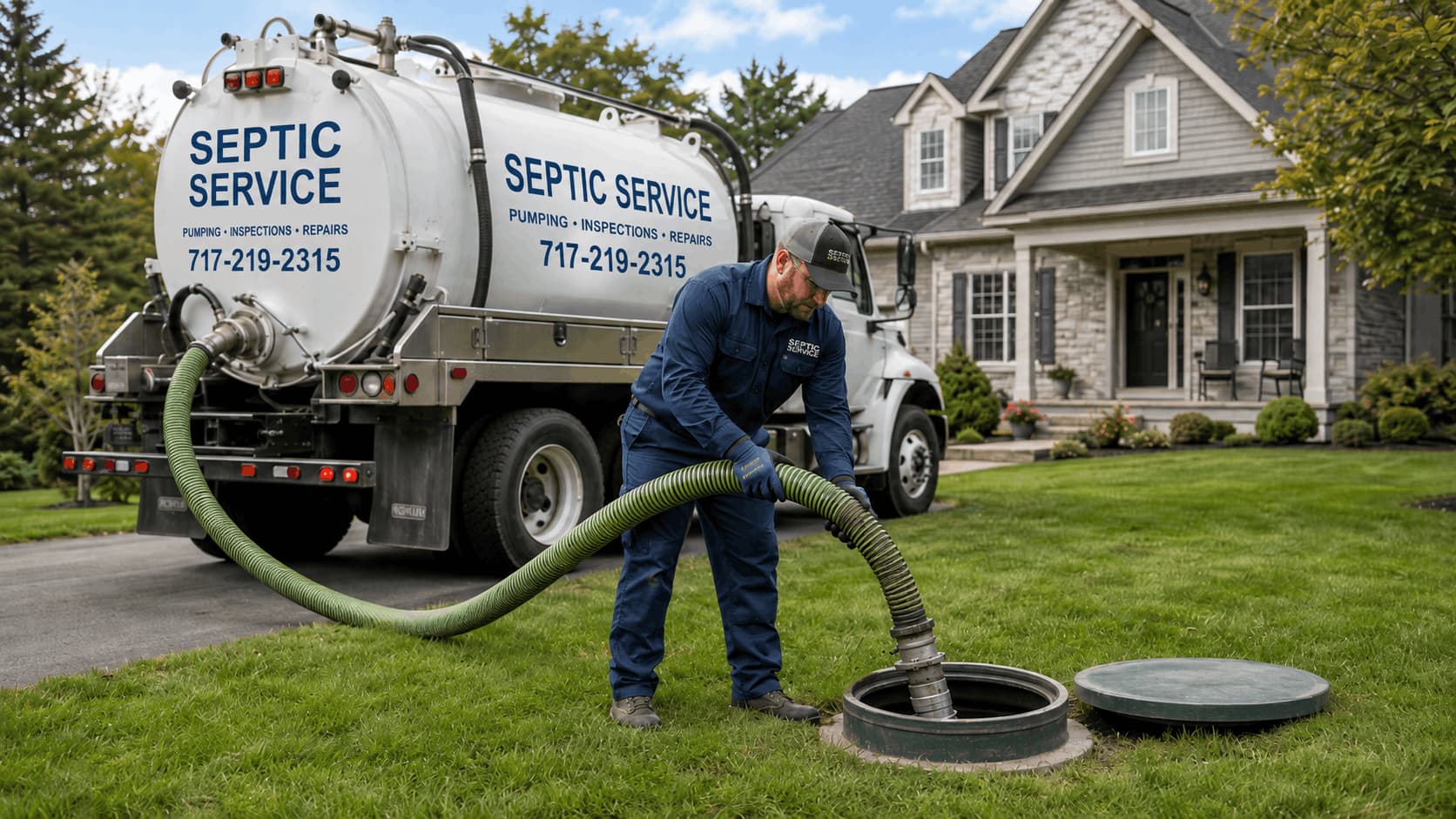
Septic tank pumping
Scheduled pumping removes solids before they reach your drain field, the single most effective thing you can do to extend your system's life and avoid expensive repairs.
Serving central Pennsylvania homeowners and small businesses
From routine septic tank pumping to full inspections and repairs, we keep your system working and explain every step in plain English.

What we do
Scheduled pumping removes solids before they reach your drain field, the single most effective thing you can do to extend your system's life and avoid expensive repairs.
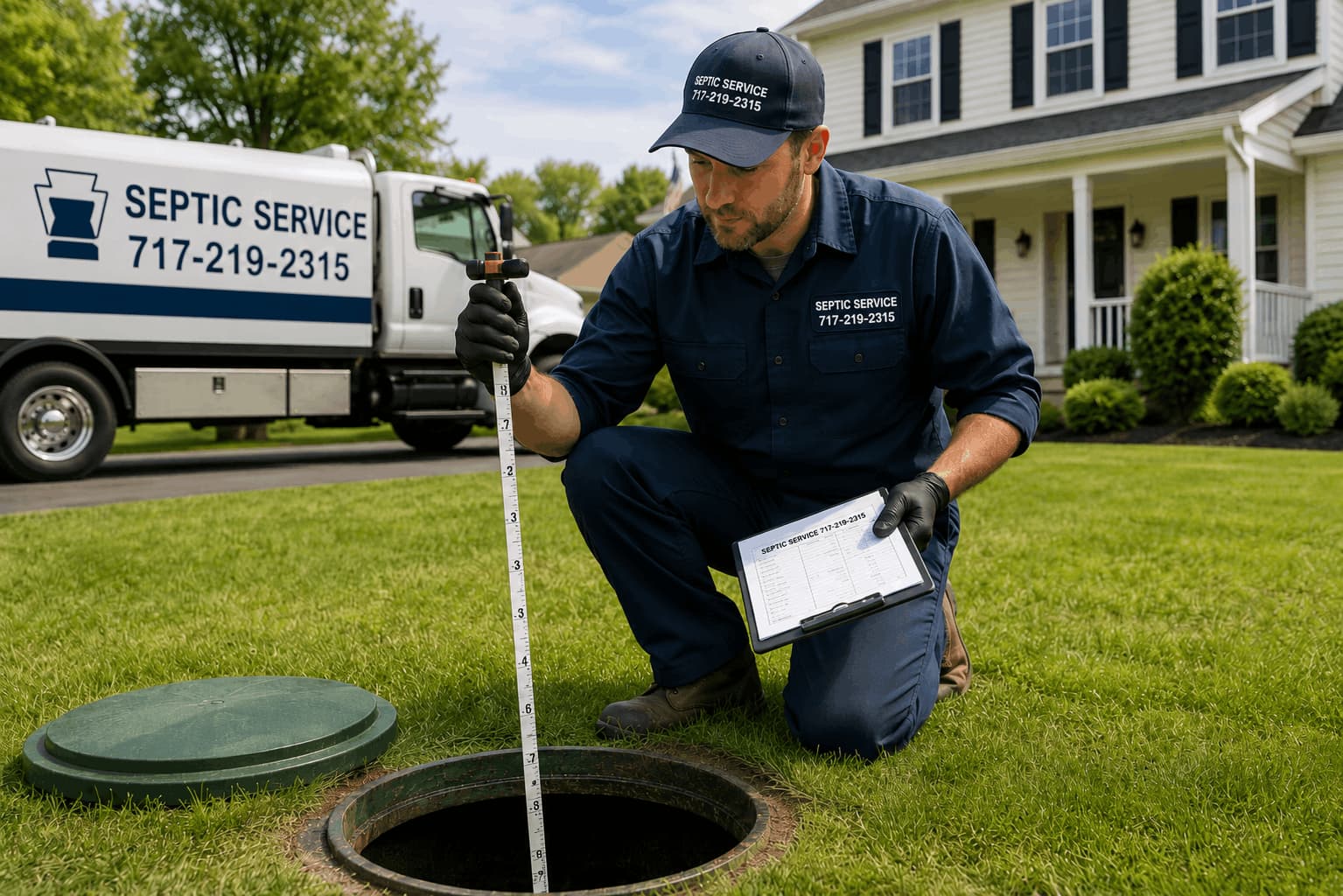
Thorough condition assessments for homeowners, property buyers, and sellers. We measure sludge levels, check baffles, and evaluate the drain field, then write it up in language you can actually use.
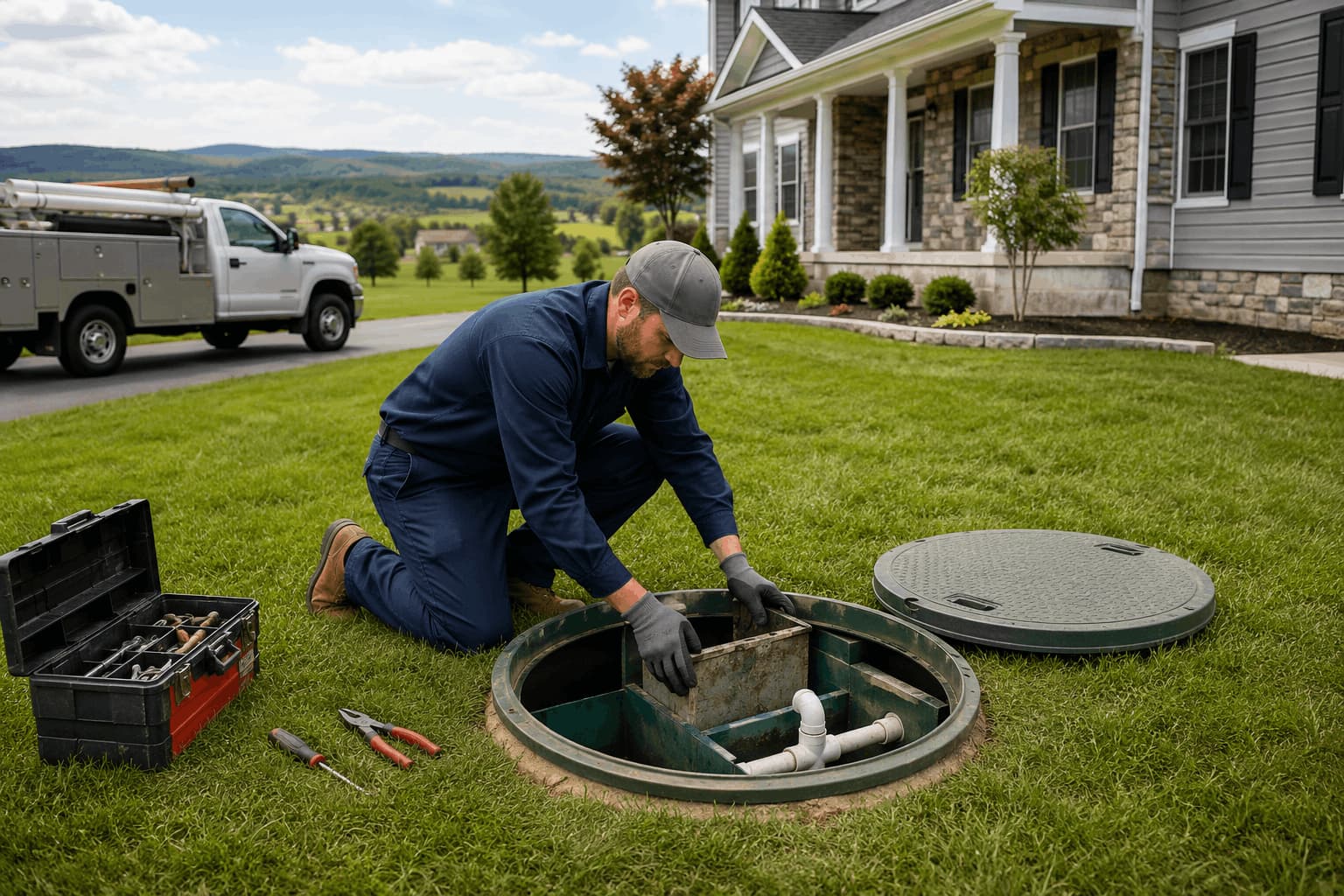
Targeted troubleshooting and repair for damaged lids, inlet and outlet baffles, effluent filters, distribution boxes, risers, and other common failure points.
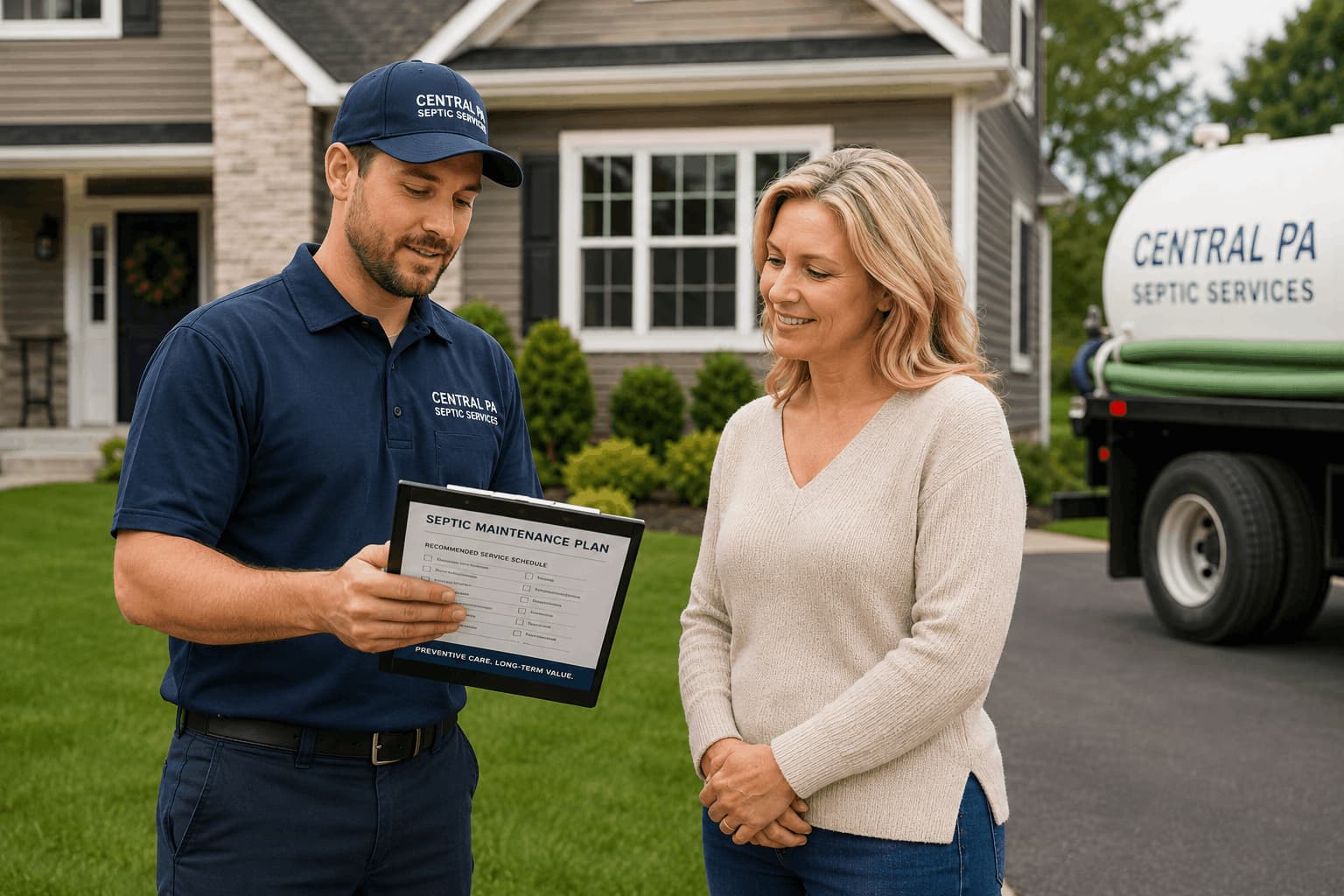
Scheduled reminders and recurring service for households and small commercial properties that don't want to think about their septic system until they have to.
Why homeowners choose us
Every inspection comes with a plain-English summary: what we found, what needs attention now, and what can safely wait. No guesswork left on your end.
We tell you what actually matters for your system, not a list designed to upsell. If it can wait six months, we'll say so.
We serve Central PA exclusively, which means flexible scheduling, reasonable response times, and a technician who knows local soil conditions, county regulations, and the system types common to your area.
Inspection value
Most expensive septic failures start as small issues that are easy to miss without a full inspection. Catching those issues early helps you avoid emergency repairs, backup events, and drain field damage that can cost thousands.
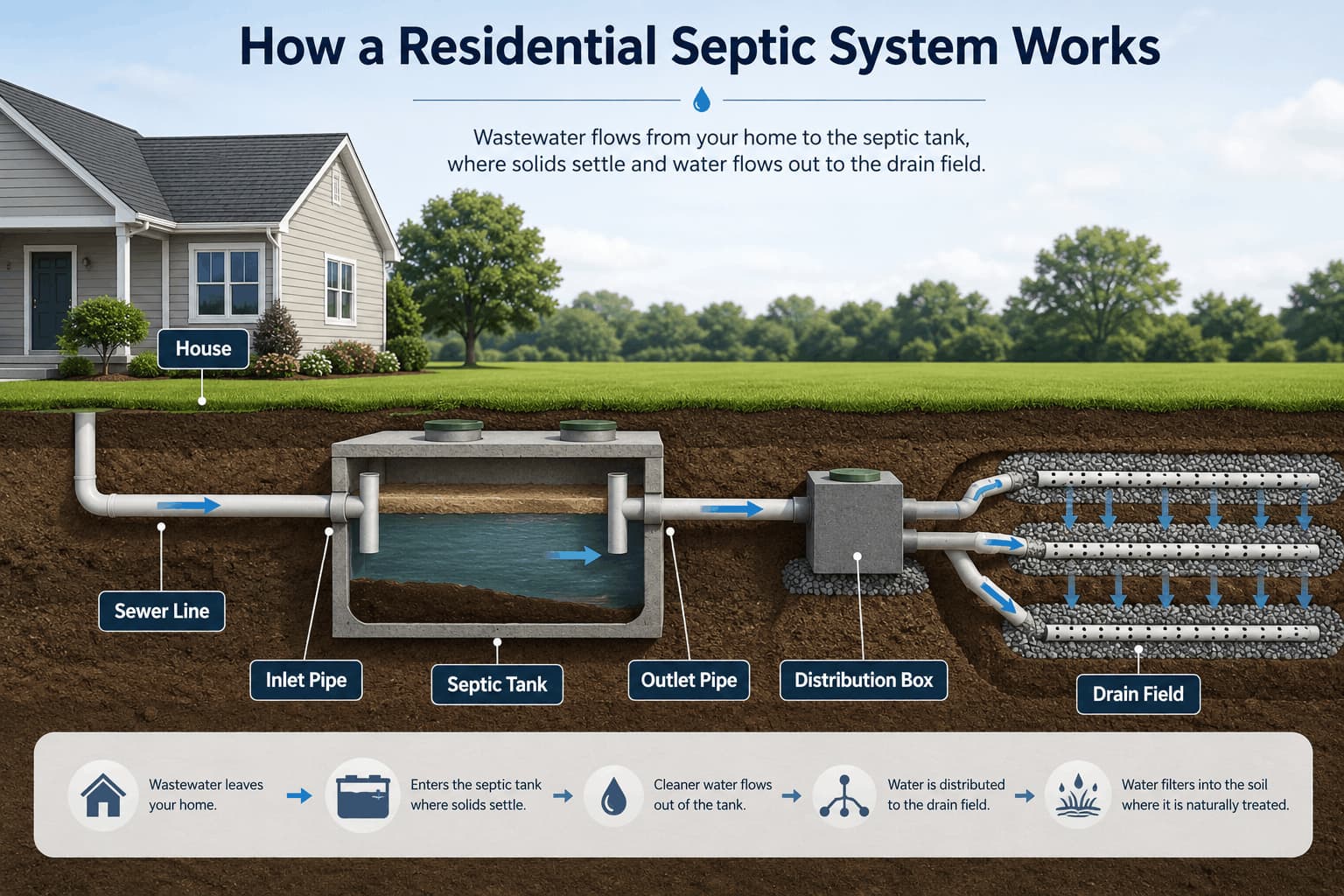
Inspections reveal early warning signs like rising sludge levels, damaged baffles, failing lids, and distribution issues before they lead to backups or system shutdown.
Instead of guessing, you get a practical plan for what to handle now, what to monitor, and what can wait, so your budget goes to the right fixes at the right time.
For buyers and sellers, a documented inspection reduces surprises during negotiations and helps support smoother transactions when lenders require septic verification.
Service area
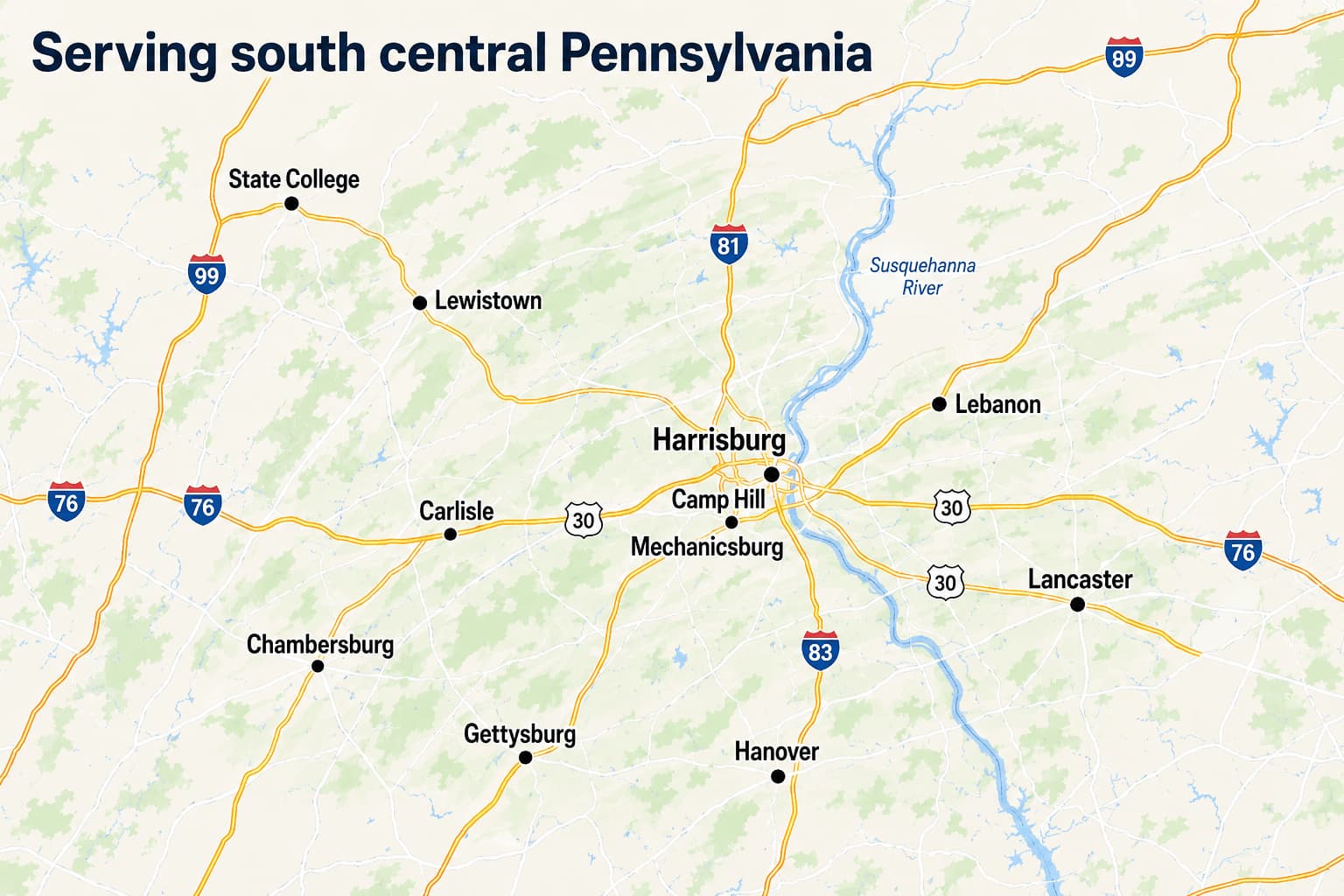
We cover Harrisburg, Mechanicsburg, Carlisle, Camp Hill, York, Lancaster, Lebanon, Lititz, State College, Lewistown, and the surrounding region. If your town isn't listed, give us a call, we may still be able to help.
Common questions
Maintenance & Pumping
For most households, every 3 to 5 years is the right window, but it's not a one-size-fits-all answer. A family of six will fill a 1,000-gallon tank much faster than a retired couple in the same house. The honest formula considers three things: how many people live in the home, the tank's capacity, and how much water the household uses daily.
As a rough baseline: a 1,000-gallon tank serving 4 people typically needs pumping every 3-4 years. A 1,500-gallon tank serving 2 people might go 7-8 years. When in doubt, have a technician measure your sludge and scum layers during an inspection, that gives you a data-driven answer specific to your system instead of a guess.
When solids build up past the safe threshold, they start overflowing into the drain field with the liquid effluent. Your drain field is not designed to handle solids, once it becomes clogged with sludge, the soil loses its ability to treat and absorb wastewater. A failed drain field can cost $5,000 to $20,000 or more to replace, depending on your property and system type. Pumping on schedule is genuinely the cheapest maintenance you can do.
The most impactful habits are also the simplest:
You can, but it meaningfully increases the solids load entering your tank. Ground food waste doesn't break down the same way human waste does, and it accumulates faster. If you have a garbage disposal and a septic system, plan on pumping more frequently, closer to every 2 to 3 years, and be conservative about what you grind. Fibrous vegetables, fats, and large food scraps are particularly problematic.
The "septic-safe" label mostly means a product won't immediately devastate your tank's bacterial population. For everyday dish soap, laundry detergent, and hand soap, standard products used in normal quantities are generally fine. What to avoid: routine use of antibacterial soaps, bleach in large amounts, drain-clearing chemicals like Drano, and anything that claims to kill bacteria on contact, because your tank runs on bacteria.
A useful rule of thumb: if you wouldn't pour it directly into a pond, keep it out of your septic system.
Warning Signs & Troubleshooting
Some signs are obvious; others are easy to dismiss until they become expensive. Watch for:
Any one of these warrants a service call. Multiple at once means you should call today.
This is called surfacing effluent, partially treated wastewater breaking through the soil surface instead of being absorbed underground. It's both a system failure and a public health concern, since surfacing effluent contains pathogens. Keep people and pets away from the area.
Common causes include a full tank backing up into the field, a failed distribution box, biomat buildup clogging the soil, or a drain field that has reached the end of its useful life. A technician needs to diagnose the specific cause before you can choose a solution. Don't try to dry it out by cutting back on water use alone, the underlying problem won't resolve on its own.
Indoor septic odors usually have one of a few causes: dried-out P-traps in rarely used fixtures (pour water into floor drains and unused sinks to reseal them), a cracked or improperly vented pipe, a loose toilet seal, or, if the smell is throughout the home and getting worse, a full or failing tank. Outdoor odors near the tank lid or risers can be normal in small amounts after heavy rain, but persistent odors point to a lid seal issue, a cracked tank, or a system under stress. If odors are strong or widespread, schedule an inspection.
Yes, significantly. Saturated soil can't absorb effluent as effectively, so your drain field's capacity is temporarily reduced during and after prolonged rain. This is why you may notice slow drains or odors after a heavy storm even if your system is otherwise healthy. The bigger risk is when surface water or groundwater infiltrates your tank through cracked lids, risers, or pipe joints, this "inflow and infiltration" adds excessive volume and can force solids into the drain field. If problems consistently follow rain events, have your tank lids and inlet/outlet pipes checked for cracks or gaps.
Inspections & Real Estate
Yes. We offer inspections for buyers, sellers, and real estate transactions across central Pennsylvania, with findings written in plain language you can actually use. A pre-listing inspection gives sellers time to address problems before they derail a deal. A buyer's inspection gives you leverage, peace of mind, and a clear picture of what you're taking on. We can typically turn around written reports quickly enough to fit most closing timelines, reach out early to schedule around your date.
A thorough inspection goes well beyond confirming the tank exists. It includes: locating and exposing the tank lids, measuring sludge and scum layer depths, inspecting the inlet and outlet baffles or tees, checking tank walls and lids for cracks, evaluating the distribution box if accessible, and assessing the drain field for signs of stress or failure. We run water through the system and observe how it responds. You receive findings for every component, not just a pass/fail checkbox.
Before closing, get answers to these:
If the seller can't answer most of these, that's useful information too. A pre-purchase inspection gives you an independent, factual baseline regardless of what records exist.
Yes. Lenders backing FHA and VA loans often require a passing septic inspection before they'll fund the mortgage. In conventional sales, a failed or failing system is a significant negotiating point, buyers can request repairs, a price reduction, or escrow funds to cover remediation. Sellers who know their system's condition before listing are in a far better position to handle this on their own terms rather than under closing-day pressure.
System Types & How Things Work
At its core, a conventional septic system does two things: separate solids from liquids, and treat those liquids naturally in the soil.
Wastewater from your home flows into the septic tank, where it separates into three layers: scum (fats and oils) floats on top, sludge (solids) settles at the bottom, and relatively clear liquid effluent sits in the middle. The effluent flows out through the outlet baffle into the drain field, a network of perforated pipes buried in gravel-filled trenches. As effluent seeps through the soil, naturally occurring bacteria break down remaining pathogens and nutrients before the water reaches the groundwater table. It's a system that works remarkably well when it's properly sized, used correctly, and maintained.
A conventional system uses gravity to move effluent from a tank to a gravel-and-pipe drain field in suitable soil. It's the simplest and most common type.
Alternative systems are used when site conditions make a conventional system impractical, shallow soil, high groundwater, poor absorption, or a limited lot. Common alternatives include:
Alternative systems typically require more maintenance, have mechanical components that can fail, and often require an annual service contract. Know which type you have before buying a property.
Risers are vertical extensions, usually plastic or concrete, that bring your tank's access lids up to or near ground level. Without them, a technician has to excavate down to the tank every service visit, which adds time and cost.
If your tank lids are buried, installing risers is one of the best-value upgrades you can make. The cost is modest, they last indefinitely, and every future service call will be faster and less expensive because of them. We install risers as part of routine service when they're absent.
The drain field, also called a leach field or absorption field, is where your system disperses and naturally treats effluent in the soil. It typically consists of perforated pipes in gravel-filled trenches. Microorganisms in the soil do the final treatment work as liquid slowly percolates downward.
A well-maintained drain field in suitable soil can last 25 to 30 years or longer. Fields fail early when overloaded with solids from an unpumped tank, flooded with excessive water, compacted by vehicles, or clogged by root intrusion. Drain field replacement is the most expensive septic repair there is, which is why all the less expensive maintenance steps matter so much.
Costs & Practical Questions
Routine pumping for a standard residential tank in Central PA typically runs between $250 and $500, depending on tank size, access conditions, and how long it's been since the last service. Tanks requiring excavation to expose buried lids, or those with unusually heavy solid accumulation, will cost more. Installing risers eliminates excavation cost from every future visit and pays for itself quickly.
We provide clear pricing before we start, no surprises once we're on-site.
Costs vary widely depending on what's needed:
These figures reflect Central PA conditions and vary by soil type, lot constraints, system type, and permitting requirements. Consistent maintenance is by far the most reliable way to stay away from the high end of this range.
Yes. Septic installation, replacement, and significant repairs are regulated at the county level under Act 537, the Pennsylvania Sewage Facilities Act. Any new system or system replacement requires a permit from your local sewage enforcement officer (SEO), a site evaluation (perc test and soil probe), and an approved sewage facilities plan. Routine maintenance like pumping does not require a permit. If you're planning a repair or replacement, start the permitting process early, evaluations and approvals can take weeks to months depending on your county.
Possibly, but not automatically. Septic systems are permitted and sized for a specific number of bedrooms, each bedroom is used as a proxy for occupant load and water use. Adding a bedroom or significant bathroom may require upgrading your tank, your drain field, or both to meet current code. Before adding square footage, consult your county sewage enforcement officer and have your current system evaluated. Expanding without addressing septic capacity is both a compliance issue and a system failure in waiting.
Start with your county health department or municipal office, most keep records of sewage permit applications that include a site diagram. If no records are available, look for clues on the property: grass that's slightly greener or a different texture over the drain field, visible risers or lids, or a clean-out pipe near the foundation. A technician can also locate the system using probing or electronic equipment. Once you find it, document the location, future owners and future contractors will be grateful.
Near the tank or over the drain field, be selective. Shallow-rooted plants like grass and low groundcovers are fine over the drain field and help manage moisture. Avoid trees and large shrubs within 10 to 20 feet of the tank or field, root intrusion is a leading cause of pipe and tank damage. Don't deep-till vegetable gardens over the drain field, and avoid concentrating irrigation water in the area. Edible crops should never be planted directly over the drain field due to potential pathogen exposure in the effluent.
Don't wait!
Routine service is the easiest way to prevent backups, foul odors, and expensive drain field work. Book today and we will follow up fast.
Schedule service
Fill out the form and we'll get back to you, usually the same day. Or call us directly during business hours.